For anime enthusiasts seeking to translate their passion into strategic gameplay, the world of Trading Card Games (TCGs) offers a compelling intersection of iconic characters, vibrant art, and deep tactical decisions. The challenge lies in navigating a diverse landscape where some TCGs are direct adaptations of beloved anime series, while others merely echo the aesthetic. Selecting a TCG that genuinely resonates requires understanding how well its mechanics, lore, and community align with the specific appeal of anime culture. This guide cuts through the noise, detailing the TCGs that deliver authentic anime experiences, whether you prioritize faithful adaptations, original narratives with an anime flair, or competitive depth.
What to Look For in an Anime-Inspired TCG
When evaluating TCGs for an anime fan, several factors distinguish a truly engaging experience from a superficial one:
- Authentic Art Style and Thematic Integration: The visual presentation should genuinely reflect anime aesthetics, either directly from an existing series or with a consistent, high-quality original style. Characters, creatures, and environments must feel like they belong within an anime universe.
- Faithful Lore and Character Representation: If the TCG is based on an existing anime, it should accurately portray the series' narrative, character abilities, and relationships. Original anime-inspired TCGs benefit from rich, internally consistent lore that enhances immersion.
- Engaging and Thematic Mechanics: Gameplay mechanics should not only be strategic but also feel consistent with the anime's themes or character powers. For instance, a TCG based on a fighting anime might emphasize direct combat and special moves, while one based on a fantasy adventure might focus on exploration and magical abilities.
- Community and Accessibility: A thriving player base and readily available resources (tutorials, online play, local game stores) contribute significantly to long-term enjoyment. Ease of learning for new players, coupled with depth for veterans, is crucial.
- Card Availability and Collectibility: Consider the ease of acquiring cards, both singles and sealed product, and the overall cost of entry and sustained play. The appeal of collecting rare cards or specific character art is often a draw for anime fans.
1. Yu-Gi-Oh! TCG
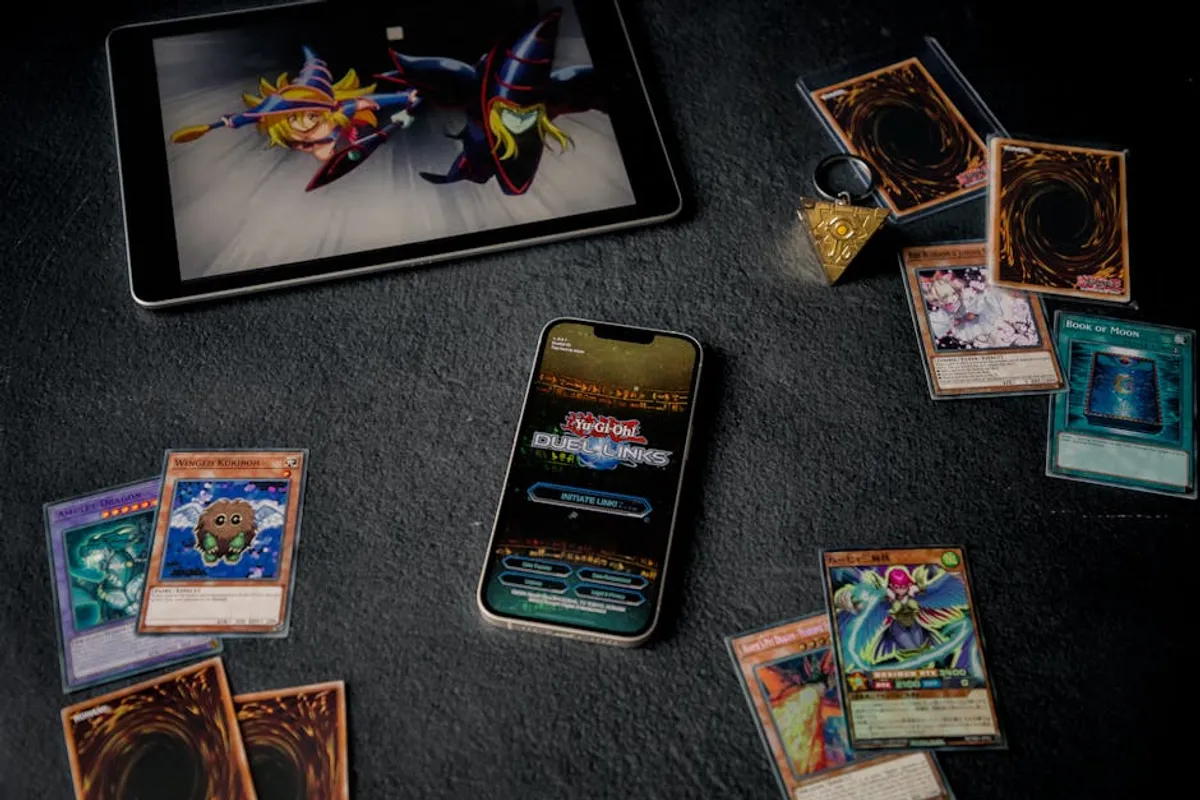
Yu-Gi-Oh! TCG stands as a cornerstone of anime-inspired card games, directly originating from Kazuki Takahashi's manga and subsequent anime series. Its core appeal lies in its intricate summoning mechanics—Normal, Fusion, Synchro, Xyz, Pendulum, and Link—which allow for complex combos and strategic board states. The game consistently introduces new card types and summoning methods, keeping the meta dynamic and challenging. Its vast card pool, spanning over two decades, offers unparalleled deck-building variety, allowing players to recreate iconic anime duels or forge entirely new strategies. The art style is distinctively shonen, featuring monsters, spells, and traps that are immediately recognizable to fans of the franchise.
Best for: Players who enjoy deep, combo-heavy strategic gameplay with a high skill ceiling and direct ties to a foundational anime series.
Pros:
- Extremely deep and complex gameplay with diverse summoning mechanics.
- Massive card pool supports countless archetypes and playstyles.
- Strong competitive scene and dedicated global player base.
Cons:
- High barrier to entry for new players due to mechanical complexity and extensive rules.
- Meta can be fast-paced and unforgiving, requiring constant adaptation.
- Deck costs can be significant for top-tier competitive builds.
Verdict: Yu-Gi-Oh! offers an unparalleled strategic depth for anime fans willing to invest the time in mastering its intricate systems, delivering a faithful and evolving dueling experience.
2. Pokémon TCG
The Pokémon TCG translates the beloved monster-collecting anime and video game franchise into a card game focused on evolution, type matchups, and strategic resource management. Players collect and battle with their favorite Pokémon, evolving them through stages to unleash more powerful attacks and abilities. The game's mechanics are relatively straightforward to learn, making it accessible to a wide audience, yet it offers significant strategic depth through energy management, Trainer card interactions, and prize card mechanics. Its art style directly mirrors the iconic designs from the anime and games, making each card a collectible piece of the Pokémon universe.
Best for: Anime fans seeking an accessible TCG with iconic characters, clear objectives, and a balance of casual and competitive play.
Pros:
- Highly recognizable characters and art directly from the anime.
- Relatively easy to learn, with mechanics that mirror the video games.
- Strong community support and consistent new releases.
Cons:
- Competitive meta can sometimes be dominated by a few powerful archetypes.
- Card rotation impacts deck longevity, requiring regular updates.
- Some powerful cards can be expensive on the secondary market.
Verdict: Pokémon TCG provides a reliable and enjoyable entry point for anime fans, leveraging its massive IP to deliver a game that is both nostalgic and strategically engaging.
3. Dragon Ball Super Card Game
The Dragon Ball Super Card Game (DBSCG) brings the high-octane battles and iconic characters of the Dragon Ball universe to the tabletop. Its mechanics emphasize fast-paced combat, energy management, and the strategic use of Leader cards that evolve and power up throughout the game. Players build decks around specific sagas or character archetypes, recreating epic clashes with abilities like "Awaken" and "Deflect." The card art directly features scenes and characters from the Dragon Ball Super anime, often with dynamic poses and vibrant colors that capture the series' intensity. The game rewards aggressive play and careful hand management.
Best for: Dragon Ball anime fans who want a TCG with direct thematic ties, dynamic combat, and a focus on aggressive, character-centric strategies.
Pros:
- Faithful adaptation of Dragon Ball Super characters and power-ups.
- Engaging combat system with Leader card evolution.
- Consistent release schedule keeps the game fresh.
Cons:
- Aggressive meta can sometimes lead to quick games.
- Some powerful cards can be difficult to acquire.
- Learning curve for optimal energy management can be steep.
Verdict: DBSCG delivers an authentic Dragon Ball experience, allowing fans to relive epic battles with a strategic card game that mirrors the anime's intensity and character progression.
4. Digimon Card Game
The Digimon Card Game offers a fresh take on the digital monster franchise, focusing on evolution, memory management, and strategic timing. Players evolve their Digimon from In-Training to Mega forms, each stage granting new abilities and increasing power. The unique "Memory Gauge" system dictates whose turn it is, adding a layer of tactical decision-making to every action. The card art is a blend of classic and modern Digimon designs, often featuring dynamic action shots that appeal directly to fans of the anime series. Its mechanics encourage building a strong board presence and timing evolutions for maximum impact.
Best for: Digimon anime fans interested in a TCG with a unique resource system, emphasis on evolution, and a strategic flow that rewards careful planning.
Pros:
- Innovative Memory Gauge system creates unique strategic depth.
- Strong emphasis on Digimon evolution and synergistic abilities.
- High-quality art featuring beloved Digimon characters.
Cons:
- New players may find the Memory Gauge system initially counter-intuitive.
- Some deck archetypes can be highly dominant in competitive play.
- Card availability for older sets can be inconsistent.
Verdict: Digimon Card Game successfully captures the essence of the franchise with mechanics that feel true to its digital evolution theme, offering a distinct and engaging TCG experience.
5. Cardfight!! Vanguard
Cardfight!! Vanguard is an anime-first TCG, meaning the card game and its associated anime series were developed in parallel, creating a symbiotic relationship. Its core mechanic revolves around "Riding" a new unit on top of your existing Vanguard, gaining power and abilities, and the "Drive Check" and "Damage Check" systems that introduce an element of chance and excitement. Players build decks around specific "Clans" (factions) that offer distinct playstyles and thematic identities. The art style is consistently high-quality, featuring intricate fantasy and sci-fi designs that directly influence the anime's character and creature aesthetics. The game emphasizes aggressive attacks and strategic use of triggers.
Best for: Anime fans who enjoy a TCG with a strong, integrated anime narrative, unique combat mechanics, and a focus on aggressive, high-impact turns.
Pros:
- Deep connection to its own anime series, enhancing immersion.
- Unique "Ride" and "Trigger" mechanics create dynamic gameplay.
- Diverse "Clan" archetypes offer varied playstyles and deck-building options.
Cons:
- Reliance on luck-based "Triggers" can sometimes feel decisive.
- Understanding all Clan abilities and interactions requires significant investment.
- Competitive meta can shift rapidly with new sets.
Verdict: Vanguard offers a compelling blend of anime storytelling and strategic card combat, providing a unique TCG experience where every turn feels like a pivotal moment in an anime battle.
6. Weiss Schwarz
Weiss Schwarz stands out by bringing together characters from a multitude of popular anime, manga, and video game franchises into a single TCG. Instead of a single overarching lore, each set is dedicated to a specific series, allowing players to build decks based on their favorite shows like Attack on Titan, Sword Art Online, or Re:Zero. The game's mechanics are designed to be relatively simple to learn, focusing on character abilities, stock management, and a unique "climax" system that provides powerful effects and triggers. The card art directly uses official anime stills and promotional artwork, making it a direct collectible for fans of specific series.
Best for: Anime fans who want to play with characters from their favorite specific series and enjoy a TCG that prioritizes fan service and accessible gameplay.
Pros:
- Features a vast array of popular anime IPs, allowing direct play with beloved characters.
- Relatively straightforward ruleset, making it accessible to new players.
- High collectibility due to direct anime art and franchise appeal.
Cons:
- Gameplay can sometimes feel less strategically deep compared to other TCGs.
- Power levels between different sets/franchises can be imbalanced.
- English releases can lag behind Japanese releases, impacting meta knowledge.
Verdict: Weiss Schwarz excels as a fan-service driven TCG, offering a direct way to engage with diverse anime franchises through a collectible and approachable card game format.
7. One Piece Card Game
The One Piece Card Game capitalizes on the immense popularity of the long-running manga and anime series, offering a TCG that immerses players in the world of pirates, Devil Fruits, and Haki. Its mechanics focus on Leader cards with unique abilities, "DON!!" cards as a resource for boosting power, and a combat system that simulates the high-stakes battles of the series. Players build decks around specific crews or characters, utilizing their signature moves and strategies. The card art is directly pulled from the manga and anime, with many cards featuring iconic moments and vibrant character designs that resonate deeply with fans.
Best for: Dedicated One Piece anime and manga fans seeking a TCG that faithfully translates the series' combat, characters, and strategic depth into card form.
Pros:
- Extremely faithful adaptation of the One Piece universe and characters.
- Engaging "DON!!" resource system adds strategic depth to combat.
- Rapidly growing player base and strong community support.
Cons:
- Newer game, so card pool is smaller compared to established TCGs.
- Competitive meta can be dominated by a few powerful Leader archetypes.
- Some highly sought-after cards can command premium prices.
Verdict: The One Piece Card Game delivers an authentic and thrilling experience for fans, allowing them to command their favorite crews and recreate epic battles with a strategic and accessible TCG.
8. My Hero Academia Collectible Card Game
The My Hero Academia Collectible Card Game (MHA CCG) brings the world of Quirks, heroes, and villains to the tabletop with a focus on fast-paced, direct combat. Players choose a "Hero" or "Villain" character and build a deck around their unique Quirk abilities, aiming to reduce their opponent's health to zero. The game uses a "momentum" system for resource generation and a clear combat chain, making battles feel dynamic and strategic. The card art features official illustrations and stills from the My Hero Academia anime, capturing the vibrant character designs and explosive action of the series.
Best for: Fans of My Hero Academia seeking a TCG that emphasizes direct combat, character abilities, and a relatively quick game pace.
Pros:
- Faithful adaptation of My Hero Academia characters and Quirk abilities.
- Streamlined combat system makes games feel fast and impactful.
- Good entry point for TCG newcomers due to clear rules.
Cons:
- Relatively new game, so the card pool is still expanding.
- Some archetypes can be very aggressive, leading to one-sided games.
- Meta can be susceptible to powerful single cards.
Verdict: The MHA CCG offers a direct and engaging way for fans to experience the hero-versus-villain dynamics of the anime, with mechanics that reflect the series' focus on individual powers and combat.
9. Shadowverse Evolve
Shadowverse Evolve is the physical TCG adaptation of the popular digital card game, Shadowverse, which itself features a distinct anime art style and fantasy lore. The game introduces unique mechanics like "Evolve" (powering up creatures on the board) and "Leader" effects, alongside a "Defense" system that acts as a secondary health pool. Players choose from different "Classes," each with its own thematic strengths and card pool, allowing for varied strategies. The card art is consistently high-quality, featuring detailed illustrations that align with modern anime fantasy aesthetics, often with a darker edge. The game balances aggressive play with strategic defense.
Best for: Anime fantasy fans who appreciate intricate card art, a robust digital game foundation, and mechanics that reward both offensive and defensive tactical decisions.
Pros:
- Stunning anime-style art with detailed character and creature designs.
- Innovative "Evolve" and "Defense" mechanics add strategic depth.
- Leverages established lore and design from a successful digital TCG.
Cons:
- Ruleset can be more complex than some other anime-focused TCGs.
- Competitive meta requires careful deck tuning and understanding of class matchups.
- English release schedule can sometimes be inconsistent.
Verdict: Shadowverse Evolve provides a visually rich and strategically deep TCG experience, appealing to anime fans who enjoy a fantasy setting with complex, evolving gameplay.
10. Final Fantasy TCG
The Final Fantasy TCG draws from the expansive universe of Square Enix's iconic video game series, which, while not strictly anime, features character designs, narratives, and aesthetics heavily influenced by Japanese animation. The game uses a unique "Crystal Point (CP)" resource system and a "Damage Zone" that acts as both a life counter and a resource generation mechanic. Players summon beloved characters, monsters, and summons from across the Final Fantasy saga, utilizing their abilities in strategic combat. The card art often features original illustrations from renowned Final Fantasy artists like Yoshitaka Amano and Tetsuya Nomura, alongside in-game renders, providing a strong visual connection to the source material.
Best for: Anime-adjacent fantasy fans who appreciate deep strategic gameplay, iconic character rosters, and high-quality art from a beloved Japanese RPG franchise.
Pros:
- Extensive roster of iconic characters and creatures from the Final Fantasy series.
- Unique resource and damage mechanics offer fresh strategic possibilities.
- High-quality original art from prominent Japanese artists.
Cons:
- Learning curve can be steeper due to unique resource management.
- Meta can be dominated by specific "Elements" or archetypes.
- Card availability for older, highly sought-after cards can be limited.
Verdict: The Final Fantasy TCG offers a rich and strategic experience for fans of the franchise and those who appreciate anime-influenced fantasy, blending deep mechanics with a vast, beloved universe.
How to Choose the Right Anime TCG for You
Selecting the ideal TCG involves more than just recognizing the anime characters on the cards. Consider your personal preferences for gameplay depth: do you prefer quick, aggressive matches or intricate, combo-driven strategies? Evaluate the time commitment required for learning rules and keeping up with new releases, as some games demand more dedication than others. Think about the social aspect: is there a local community for the game, or do you primarily intend to play online? Finally, assess the financial investment; some TCGs have higher entry costs or more expensive secondary markets for competitive decks. Trying out digital versions or starter decks can provide a low-commitment way to test the waters before fully investing in a new game.
Frequently Asked Questions
Are TCGs expensive to get into?
The cost of entry varies significantly. Starter decks are generally affordable, ranging from $10-$25. However, building a competitive deck can range from $100 to several hundred dollars, depending on the game's rarity structure and secondary market prices for individual cards. Some games, like Weiss Schwarz, can be more budget-friendly for casual play due to their focus on specific sets.
How do I learn to play a